Don’t over think ranked choice voting

I voted sticker
I voted sticker

In St. Paul, we use ranked-choice voting to elect our mayor and city council members. It isn’t as complicated as it sounds.

I’ll be casting two votes for mayor in our election on November 4. I have two choices: a first and a second.  Voters are allowed 6 choices ranked from 1 to 6, but that doesn’t mean six choices are required.  Cast your vote or votes for the candidates you want to win and ignore the rest.

St. Paul uses a ranked-choice voting (RCV) system for its municipal elections, including mayor and city council races. The system has been in place since 2009.

How RCV works in St. Paul

  • Ranking candidates: Voters can rank multiple candidates for the same office in order of preference.
  • Winning outright: If a candidate receives more than 50% of the first-choice votes, they win the election.
  • Instant runoff: If no candidate gets a majority of first-choice votes, the candidate with the fewest votes is eliminated.
  • Vote reallocation: Ballots cast for the eliminated candidate are then reallocated to the voter’s second-choice candidate.
  • Repeat until a majority: This process continues until a single candidate receives more than 50% of the vote and is declared the winner.

What RCV applies to

  • RCV is used to elect the Mayor and City Council members.
  • It does not apply to the Saint Paul School Board race, which uses the traditional voting method.
Vote No to city imposing civil fines

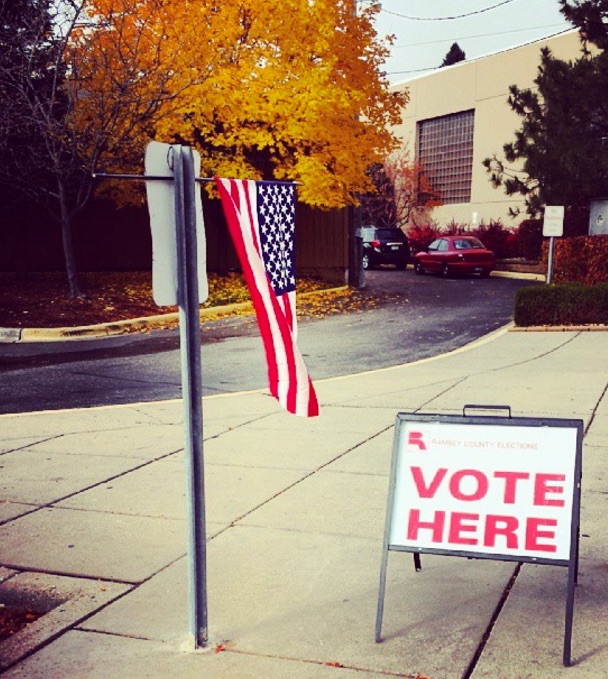
Voting on West 7th in St. Paul
vote

Next week’s elections on Tuesday, November 4th, are very important. I think we are often too focused on national elections when local elections can have a huge impact on our daily lives.

In addition to voting for a new mayor, there are other important issues on the ballot, and I want to bring one of them to your attention:

St. Paul City Question 1 is on the ballot as a referendum in St. Paul on November 4, 2025.

A “yes” vote supports amending the city charter to permit city officers to issue administrative citations that carry penalties of civil fines.
A “no” vote opposes amending the city charter to permit city officers to issue administrative citations that carry penalties of civil fines.

I’ll be voting no on this. I don’t believe the city should have the power to issue administrative citations (fines). My opinion is based on how the city handles building code enforcement by registering homes occupied by seniors as “vacant”.  Code and ordinance enforcement in St. Paul is compliance-driven and not always fair or equal.

“This referendum would either retain or repeal Ordinance Ord. 25-2, which was signed into law by the St. Paul Mayor Melvin Carter (DFL) in January of 2025.

Ordinance Ord. 25-2 authorized the St. Paul City Council to impose civil penalties or administrative fines for violations of city ordinances as an alternative to criminal citations. Individuals accused of violations must receive notice and have an opportunity to appeal before any penalty takes effect. The appeals process allows for the consideration of a person’s financial circumstances. Under the ordinance, district courts are also granted jurisdiction to enforce unpaid civil penalties.[1]

I am not in favor of this ordinance, which expands the city’s power. I base my opinion on decades of experience with the city. I do not think our current system of enforcement can be administered fairly. I have seen what happens when the city piles on fine after fine that property owners can not pay. The fines are assessed to property taxes, and the owner ultimately ends up in foreclosure. This feels so wrong.

The City of St. Paul struggles to manage trash collection systems. I can not imagine how giving them more power would end well for St. Paul residents.

Please vote no on St. Paul City Question 1.

Minnesota Home sales September 2025

This just in from Minnesota Realtors, which is the Minnesota Realtors Association:

September Home sales in Minnesota
September Home Sales in Minnesota

Home sales up as rates fall
Both buyer and seller activity increased statewide in September. More than half of Minnesota counties showed year-over-year gains in both sales (58.6%) and new listings (54.0%).

Mortgage rates have improved significantly, dropping to around 6.35% in September from 6.82% in June and nearly 7.0% in January. Home buyers, especially first-timers, are sensitive to rate changes, and even small improvements in affordability will bring more buyers off the sidelines.

“Higher mortgage rates and tight inventory have been the biggest factors holding back sales this year,” said Patti Jo Fitzpatrick, President of Minnesota Realtors®. “But with the ‘friendlier’ rates and more inventory lately, activity could pick up in the fourth quarter.”

The housing market remains “rate dependent,” rates are “Fed dependent,” and the Fed is “data dependent.” Recent economic data makes rate cuts more likely. In the coming months, the 10-year yield—which informs mortgage rates—is one of several key indicators to watch.

September 2025 Statewide Key Market Indicators (% represents year-over-year change):

New Listings—9,076 (up 4.9%)
Pending Sales—5,977 (up 5.9%)
Closed Sales—6,229 (up 7.0%)
Median Sales Price—$357,200 (up 2.1%)
Days on Market—41 (up 5.1%)
Percent of List Price Received —97.4% (down 0.3%)
Inventory—17,957 (up 2.4%)
Months Supply—3.2 (0.0%)

Here in St. Paul, there are more homes on the market at higher prices.

September 2025 Home Sales

Here is a quick look at September 2025 home sales by neighborhood in St. Paul, MN. The number of homes on the market is up as are new listings. At the same time, pending sales are down. Prices are still rising.  Homes for sale in downtown St. Paul are at or near an all-time high.

During times of uncertainty, people are less likely to buy a house.

September home sales
September home sales – St. Paul, Minnesota

The numbers used to make the table were exported from the NorthstarMLS, which is deemed reliable but not guaranteed.

It won’t always be hot October

This year is going too fast, and yet in some ways it has been a long year. October started yesterday, and now we must consider what comes after a hot October. We may need to heat our homes soon.

It won’t be long now before we will need to fire up the furnace or boiler. Most years, we end up turning on the heat before the middle of October.  The house seems to stay warm during the day, but the days are shorter and the nights are colder.

If you have a forced air furnace, now is a great time to buy furnace filters. I usually buy enough to last through the winter.

Now is a good time to schedule a furnace or boiler inspection and tune-up. If the dang thing stops working on Christmas Eve or during a major cold spell, getting it repaired is going to be expensive.

Usually, a tune-up isn’t expensive.

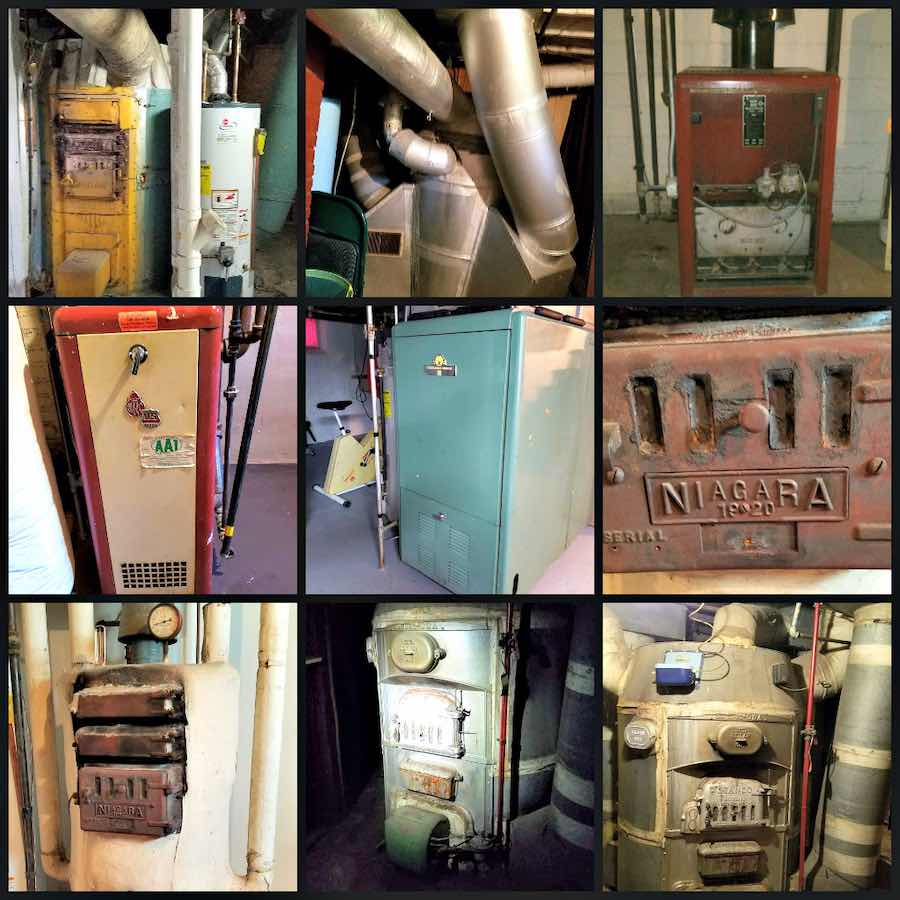
furnace collage
Antique furnaces and boilers